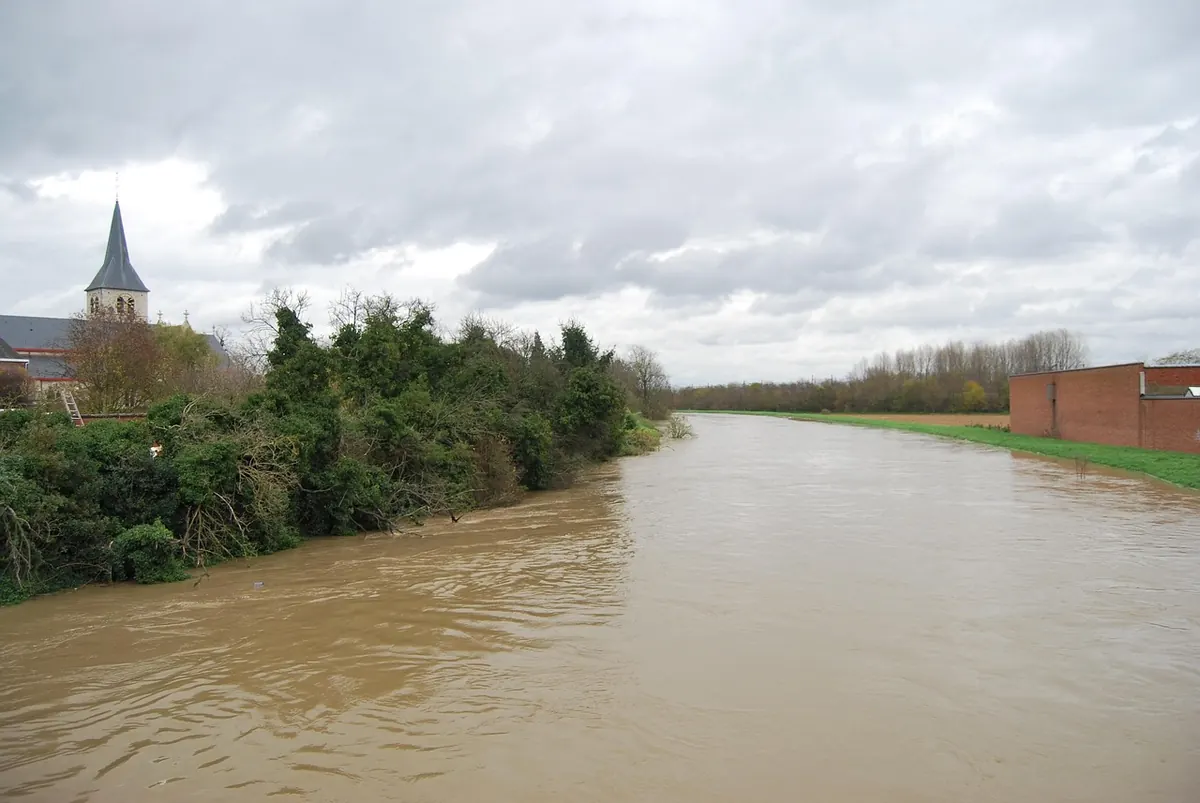
Climate Change and UK Storms: What the Science Says About Rainfall and Flooding
A storm that drops a month's rain in a day. A river spilling into a high street it has never reached before. A summer downpour that overwhelms the drains in twenty minutes. These are the events that make people ask the obvious question: is this climate change? For UK rainfall and flooding, the science has moved a long way from a shrug. Some answers are now quite firm. Others remain genuinely uncertain, and it helps to know which is which.
Warmer air carries more water
The starting point is physics, not opinion. Warm air can hold more water vapour — roughly 7 per cent more for every 1°C of warming, a relationship known as the Clausius–Clapeyron equation. The UK sits in the path of Atlantic weather systems, so most of the rain that reaches us has crossed a stretch of ocean first. Warmer seas evaporate more readily, and a warmer atmosphere can carry that moisture further before it condenses and falls.
The practical consequence is that when a storm does form, it has more fuel to work with. The heaviest, shortest bursts — the kind that arrive in a couple of hours and turn a road into a stream — are where the signal tends to show up most clearly, both in the UK and in many other mid-latitude countries.
Total rainfall matters less than how it arrives
Two Februaries can record identical monthly totals and behave completely differently. Thirty millimetres spread across a week soaks in. Thirty millimetres in ninety minutes runs off. Catchments, drains and rivers respond to intensity and timing far more than to a neat monthly figure, which is why "wetter winters" is a useful headline but a poor guide to what your street will actually do.
What the UK record already shows
The long-running UK observations point in a consistent direction. Recent decades have been wetter overall than the twentieth-century average, with much of that increase concentrated in winter and in heavy rainfall events. Summers have tended slightly drier on average, but with a larger share of their rain arriving in intense bursts — awkward for farmers, water companies and anyone who knows the difference between a steady soak and a downpour.
Individual years still swing wildly. The winter of 2023–24 brought a run of named storms and left soils saturated across large parts of England and Wales. Other winters have been dry enough to prompt hosepipe restrictions. A trend is not a promise about next year.
Rain is not the same thing as flooding
This is where a lot of public argument goes wrong. Flooding is a chain of events, and rainfall is only the first link.
- River flooding (fluvial): rivers rise after sustained rain, sometimes days after the storm that caused it.
- Surface water flooding (pluvial): drains and gullies cannot cope with intense rain, and water sheets across roads and into properties.
- Coastal and tidal flooding: storm surge, high tide and low pressure combine, with sea level rise lifting the baseline.
- Groundwater flooding: saturated aquifers push water up through the ground, often weeks later.
- Sewer flooding: combined systems overload, sometimes with unpleasant results indoors.
Which link breaks depends on soil moisture, catchment shape, land use, drainage capacity, tide times and how much concrete has replaced grass since the last big flood. A saturated January turns the same storm into a very different week than a dry August would.
How scientists attribute a storm to climate change
Attribution science does not try to prove that a single storm "was caused by" climate change. It asks how the odds, or the intensity, have shifted.
The method, in outline
- Define the event precisely: where, when, and which measure — daily rainfall, a three-day total, a river peak.
- Gather observations and work out how unusual the event is in the historical record.
- Run large ensembles of climate model simulations, some representing the world as it is and some a world without human greenhouse gas emissions.
- Compare the two: how much more likely, or more intense, is this event in the warmer world?
- Publish the result, usually as a risk ratio or a percentage change in intensity, and submit it to scrutiny.
Groups such as World Weather Attribution have made the process fast enough to produce findings within weeks of major floods, which helps public understanding. The caveats are real: small, short-lived convective storms are difficult for models to resolve, and in some events natural variability dominates. A result of "no clear trend" is a legitimate outcome, not a failure.
Where the uncertainty lies
Scientists disagree less about the direction than about the size. Different models give a range of answers for the UK, particularly for summer rainfall, which is genuinely hard to project. Natural patterns such as the North Atlantic Oscillation shift storm tracks from year to year, producing wet and dry spells that have nothing to do with greenhouse gases. And exposure keeps changing on its own: more homes on floodplains, more front gardens paved over, drainage designed decades ago for a different climate.
Sea level rise compounds all of it. Even if rainfall totals stayed flat, a higher sea makes tidal flooding worse, and it worsens "tide-locking" — where a river cannot drain to the sea because the tide is already high.
What this means for how the UK adapts
Adaptation is the unglamorous half of climate policy, and much of it is local: stronger and better-maintained defences in some places, natural flood management in others, where leaky dams, tree planting and restored wetlands slow water high in the catchment. Sustainable drainage systems that hold water in planted basins rather than pushing it straight into a pipe. Property-level measures such as flood doors, air-brick covers, tiled floors and sockets raised above expected water levels. Planning decisions that avoid creating new risk.
One practical note on insurance. If you own or are buying a property in a flood-risk area, check the flood risk maps and speak to a broker who understands the Flood Re scheme before you commit. Eligibility rules change, so get advice for your own circumstances rather than relying on a neighbour's experience.
Getting ready for the next named storm
Most of the useful work happens in advance, in an hour or two, rather than at midnight with a torch.
- Check your risk. The Environment Agency, Natural Resources Wales, SEPA and DAERA all publish flood maps and long-term risk information.
- Sign up for flood warnings, even if you think you are safe. It takes minutes and buys you time to move cars and valuables.
- Learn your utilities. Find the stopcock, the electricity isolation switch and the gas valve before you need them.
- Put together a small flood kit: torch, batteries, a waterproof bag for documents, medication, a change of clothes, a phone charger and bottled water.
- Move what matters — passports, insurance documents, photographs — upstairs or into sealed boxes.
- Think about surfaces. Permeable paving, water butts and planted borders slow runoff. If you are redoing a driveway, this is the moment.
- Talk to your neighbours. Knowing which drains block and which route out of the street stays dry is worth more than any app.
A warmer UK will not turn every shower into a flood. It will load the dice — and knowing how they are loaded is the first step towards being ready
Photo: Ben_Kerckx / Pixabay
You Might Also Like
From frosty January mornings to warm, thundery August afternoons, this month-by-month guide explains typical UK weather, regional quirks and how to plan ahead.
UK winters are getting milder and wetter, with fewer hard frosts and more intense rain. Here's what's changing, and how to prepare your home, garden and travel plans.